The escalation of geopolitical tensions in the Middle East, particularly culminating in the tightening of distribution routes in the Strait of Hormuz recently, has sent shockwaves throughout the global energy market. With approximately 20% of the world's oil supply passing through this 33-kilometer-wide strait, even a minor disruption is enough to trigger a drastic surge in crude oil prices.
For Indonesia, this serves as a wake-up call for our National Energy Security. As an oil-importing country that still brings in hundreds of thousands of barrels per day to meet domestic demand*—a large portion of which originates from the Middle East—Indonesia's position is quite vulnerable to global supply chain shocks.
The Limitations of National Reserve Capacity
One of the critical points of our current national energy architecture is the endurance of our operational reserves. If the worst-case scenario unfolds—namely a total halt in import supplies—our national fuel reserves will face a highly constrained operational timeframe. This condition forces us to rethink our national energy logistics paradigm.
PAMITRA's Perspective: The Urgency of Building Integrated Terminals
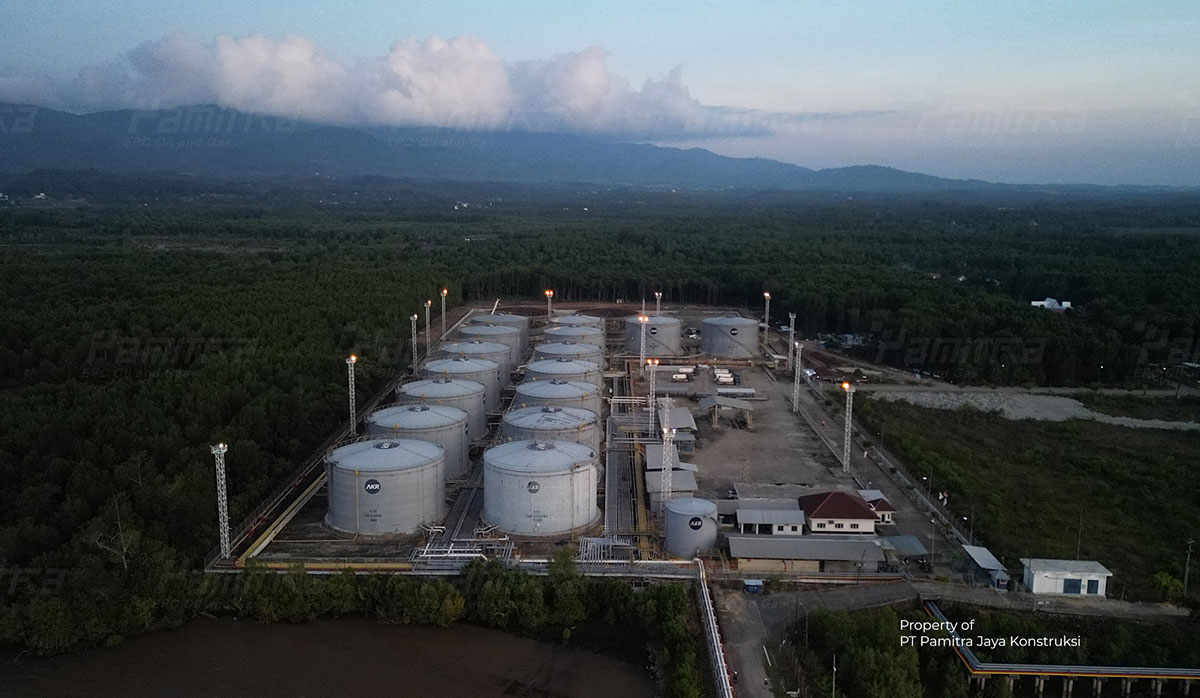
Responding to this dynamic, PAMITRA EPC Oil and Gas believes that the most logical and urgent mitigation step the government and state-owned energy enterprises must take is accelerating the expansion and construction of massive-scale oil storage facilities, specifically Integrated Terminals (IT).
Why are Integrated Terminals a crucial solution?
Source: *Kompas, Produksi Minyak Turun, Indonesia Kini Impor 1 Juta Barrel per Hari
